
Scary stories exist in cultures around the world, ranging from myths and legends to ghost stories and folktales. Much of the modern horror tradition in English-language literature grew out of European folklore and Gothic fiction. That’s where we’ll begin.
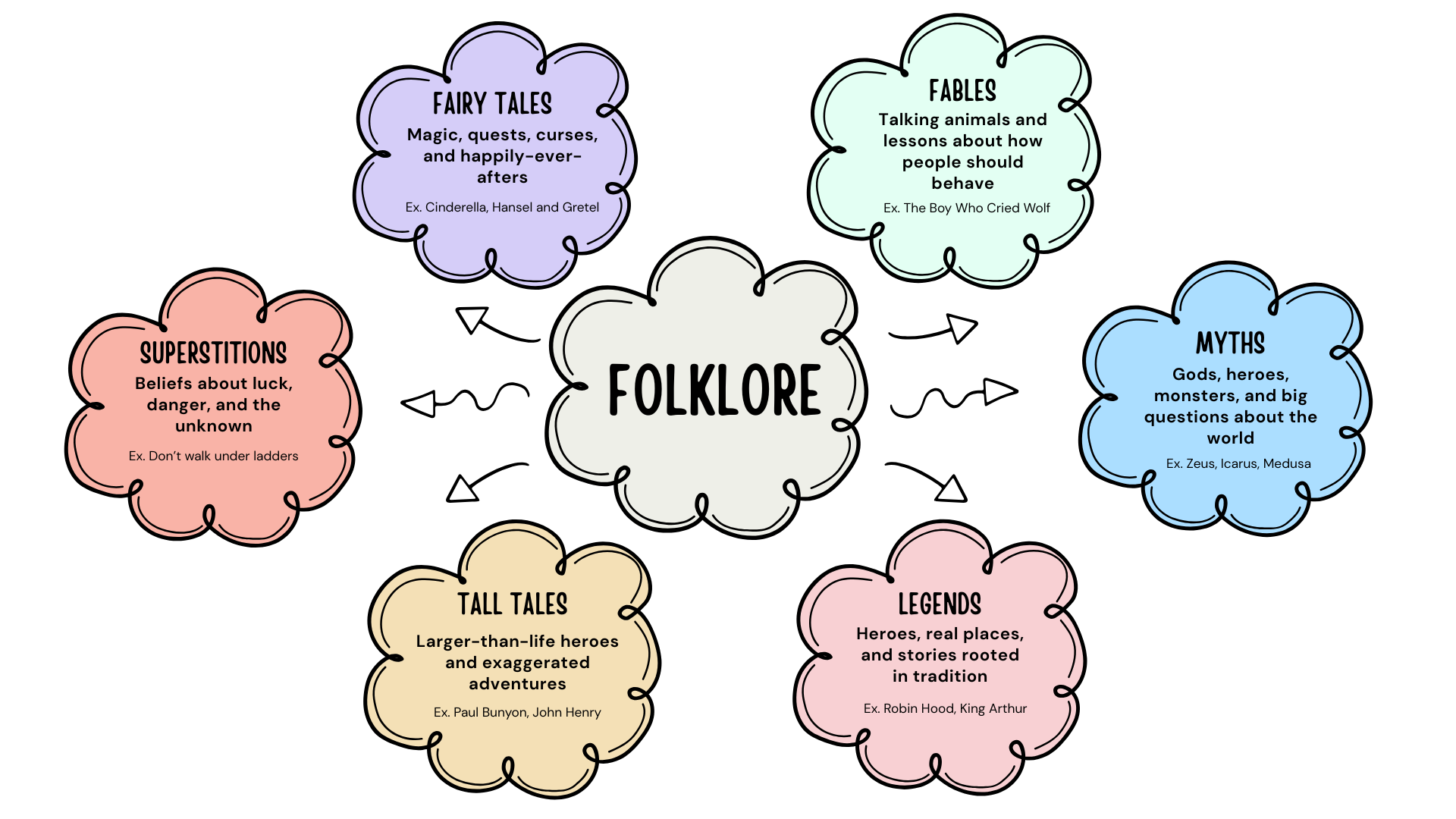
Long before horror movies and creepy stories on the internet, people told stories about ghosts, monsters, spirits, curses, and unexplained events. Many of these stories became part of folklore, the traditional stories, beliefs, and legends shared by a community or culture. Stories about supernatural beings could help explain the unknown, teach lessons, preserve traditions, or explore fears that were difficult to talk about directly.
These stories changed as they were passed from person to person. A tale told around a campfire might sound different a hundred years later or a thousand miles away. People added details, connected old stories with new experiences, and made them their own. As cultures met and the world changed, folklore evolved too, and writers began reshaping these old ideas into new kinds of stories.
In the eighteenth century, writers drew on older folklore and supernatural traditions, as well as works by writers like William Shakespeare, John Milton, Dante, and Alexander Pope, to create a new kind of literature: Gothic fiction.
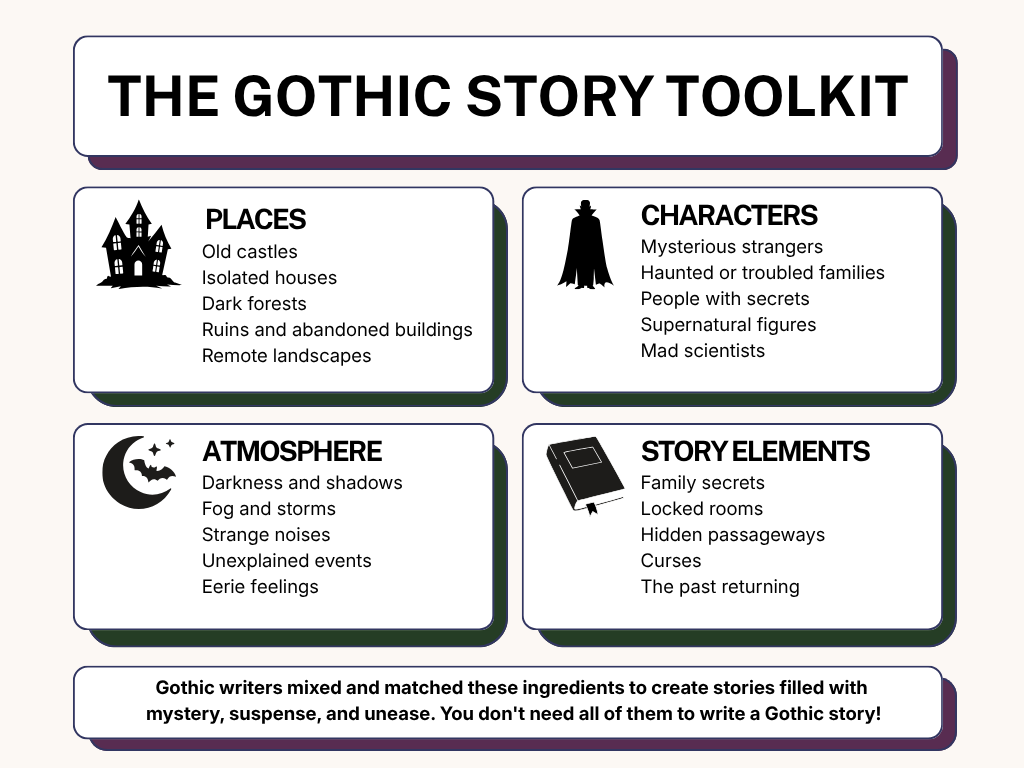
Gothic stories usually featured mysterious settings and characters confronted by secrets, strange events, or supernatural forces. One of the earliest Gothic novels was Horace Walpole's The Castle of Otranto (1764). Other writers soon experimented with the form, combining mystery, suspense, romance, and the supernatural.
Gothic fiction helped establish many ingredients we still recognize in spooky stories today: hidden passageways, mysterious strangers, family secrets, haunted places, and the unsettling feeling that the past isn't quite finished with us.
Stories about monsters are much older than modern horror, but writers in the nineteenth century began asking new questions about them.
In Frankenstein (1818), Mary Shelley imagined a scientist who creates life and then fails to take responsibility for what he has made. The creature is frightening, but he is also intelligent, lonely, and capable of learning.
Shelley’s story asks questions that still appear in horror today: What makes someone a monster? Who is responsible when something dangerous is created? Can fear and rejection change a person?
Frankenstein helped show that a monster story could be more than a battle between good and evil. It could involve complicated ideas about science, responsibility, and human nature.
Edgar Allan Poe helped show that horror doesn’t always need ghosts or monsters. In stories like “The Tell-Tale Heart,” a person’s own mind becomes the source of terror. Guilt, paranoia, obsession, and fear can be just as frightening as anything lurking outside.
Later writers explored this idea in new ways. In The Strange Case of Dr. Jekyll and Mr. Hyde (1886), Robert Louis Stevenson imagined a man who separates his good side from his darker impulses, creating a dangerous second identity. In The Picture of Dorian Gray (1890), Oscar Wilde imagined a portrait that revealed the darkness hidden beneath its owner’s beautiful appearance.
These stories turned old ideas about doubles and hidden selves into stories about identity, choices, and the parts of ourselves we don’t always understand.
Writers also continued reinventing older supernatural traditions.
Vampire stories existed long before Dracula (1897), but Bram Stoker placed an ancient creature into a modern world of trains, newspapers, doctors, and new technology.
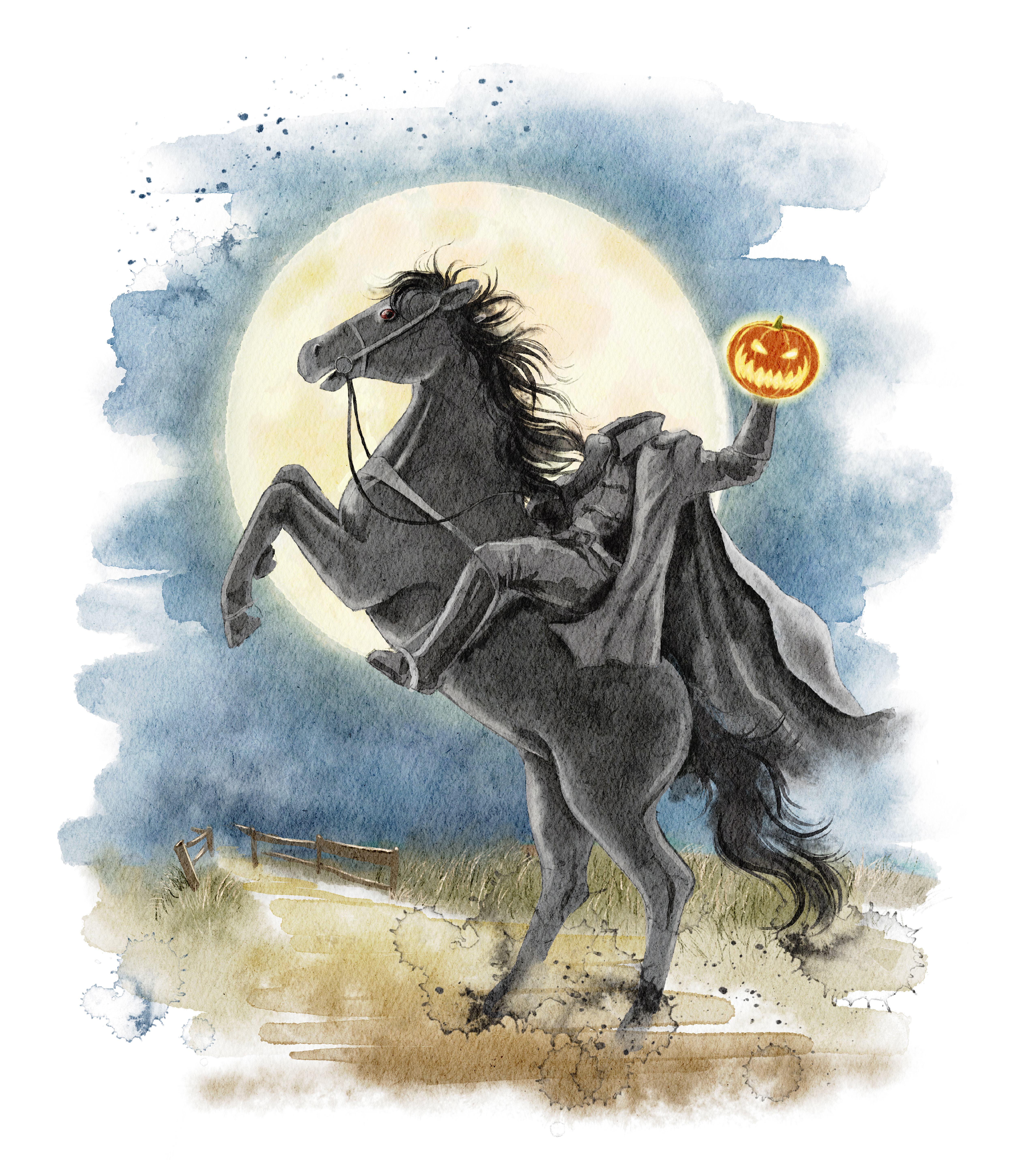
Washington Irving did something similar in The Legend of Sleepy Hollow (1820), adapting older European ghost stories to an American setting and creating one of the most iconic supernatural figures in American literature: the Headless Horseman.
These writers showed that old stories could keep changing. A familiar legend could become something new when it moved to a different place, a different culture, or a different time.
As science changed people’s understanding of the world, writers found new ways to imagine the impossible.
In The Invisible Man (1897), H. G. Wells took an idea that had long belonged to magic and fantasy—a person who could not be seen—and gave it a scientific explanation. Instead of asking readers to accept the supernatural, Wells imagined how science might make the impossible seem possible.
Stories like this helped blur the line between science fiction and horror. A scientific discovery could be exciting, mysterious, or frightening, especially when no one knew what might happen next.
By the twentieth century, horror had spread beyond books into radio, comics, film, television, and other forms. Writers were also finding frightening possibilities in places that looked completely ordinary.
Shirley Jackson’s The Haunting of Hill House (1959) turned the familiar haunted house into something deeply psychological. Her short story “The Lottery” (1948) went even further, showing how an ordinary community could become terrifying.
Horror no longer needed a castle, a monster, or even anything supernatural. A laboratory, a neighborhood, a family, a school, or a person's own mind could become the setting for a frightening story.
Sometimes the source of fear was supernatural. Sometimes it was science, another person, or society itself. As the world changed, writers kept finding new places to put old fears—and new fears to put into stories.
The monsters have changed. The settings have changed. The reasons people were afraid have changed. But many of the fears behind spooky stories have been around for a very long time: the unknown, losing control, being alone, facing death, or discovering that something familiar isn't what it seems.
That may be the most interesting thing about spooky stories. You don’t have to invent a completely new fear to tell a new story. Writers have been taking old ideas and making them their own for centuries by changing the setting, turning the familiar strange, looking at a fear from a new perspective, or imagining what might happen if the rules changed.
And you can do the same.
So what will you make scary?
Send your submissions to giftedyouth@americanmensa.org.